
When the Wiring Fails: Understanding Motor Neurone Disease
There is a particular kind of silence that follows the words “it’s Motor Neurone Disease.” It is the silence of a family trying to understand a diagnosis that changes everything, while somehow still sounding, in that first moment, like nothing at all has changed. The person sitting in front of you looks the same. They sound the same. And yet you have just been told that this illness will, in time, take almost everything from them, while leaving their mind entirely their own.
We think it helps, at that point, to have a simple way of picturing what is actually happening inside the body. So think of it like a house.
A house with failing wiring
Imagine the body as a house. The lightbulbs, which are the muscles, are in perfect working order. There is nothing wrong with them at all. But the wiring that runs through the walls, which are the nerves, is slowly failing. And because the switches on the wall, which is the brain, can no longer send their signal down that damaged wiring, the lights simply will not turn on.
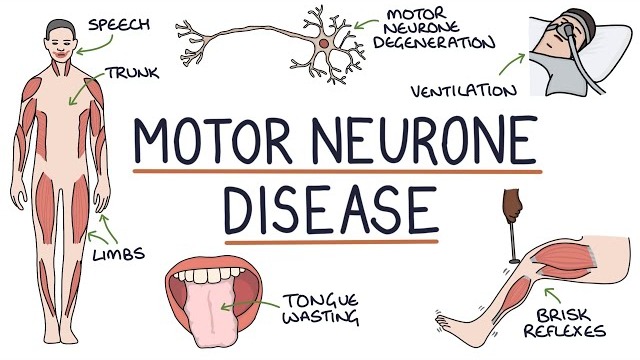
That is Motor Neurone Disease in essence. It is a progressive condition that attacks the nerve cells in the brain and spinal cord responsible for controlling movement. As those nerves deteriorate, the messages that should travel from brain to muscle are lost along the way, and the muscles they once powered begin to weaken, stiffen, and waste. Gradually, this changes how a person walks, talks, swallows, and eventually breathes.
What makes MND so cruel, and so often misunderstood, is what it does not touch. In most cases, it leaves the mind, the memory, and the five senses entirely intact. The person inside is still fully there, aware of everything that is happening to the body around them. They can still see the people they love, hear their voices, and think their own thoughts clearly. It is the house that is failing, never the person living inside it.
An illness that moves into the whole family
MND is often described as a family illness, and anyone who has lived alongside it will tell you why. It rarely confines itself to the person diagnosed. It moves into the whole household, and it rewrites the roles that everyone in that house has played for years, sometimes for a lifetime.
Husbands and wives, sons and daughters, find themselves shifting almost overnight from being a partner or a child into being a full time carer, learning to manage medication, equipment, and appointments on top of everything else that family life demands. That shift brings a physical toll that is easy to underestimate from the outside, the sheer exhaustion of lifting, of broken sleep, of always being on call, alongside a financial strain as working hours are reduced or given up altogether to make caring possible.
And underneath the practical demands sits something harder to put into words: the grief of watching someone you love change in front of you, day by day, while still being very much present. That kind of grief, carried while the person is still alive, tends to bring anxiety and isolation in its wake. Friendships can quietly fall away, simply because life no longer allows the time or energy to maintain them, and carers often find that they have not had a moment truly to themselves in longer than they can remember.
Beyond the leaflets: what families actually need
Anyone who has sat through that first appointment knows what happens next. You are handed a great deal to read: leaflets, contact numbers, websites, information sheets covering everything from benefits to equipment to symptom management. It is all useful, and none of it is quite enough. What a family facing MND needs in that moment is rarely more paper. It is people.
This is where the work of MNDA volunteers really begins. Alongside the regular support meetings we run, where people affected by MND can sit with others who simply understand, without having to explain, we also have a network of trained Association Visitors. These are volunteers who visit people with MND and their families directly, offering support that is shaped entirely around what that particular family needs, rather than a fixed script.
Ask any carer what has helped most, and you will rarely hear about a leaflet. You will hear about the volunteer who sat with their husband for an hour so they could finally have a bath in peace. The one who knew, from experience, exactly which piece of equipment to ask the occupational therapist for. The one who simply listened, without trying to fix anything, on the evening it all became too much. Association Visitors support in ways families could never have anticipated they would need until the moment they needed them, and that is precisely the point. This work is not about following a checklist. It is about showing up, again and again, for as long as it is needed.
You do not have to face this alone
If MND has come into your life, or into the life of someone you love, please know that support exists, and that it comes from people who understand, many of whom have walked this road themselves. Whether that means joining one of our support meetings, being visited by an Association Visitor, or simply having someone at the end of the phone on a difficult day, MNDA East Sussex is here.
No family should have to learn how to live with this illness from a leaflet alone.
How MNDA Comedy helps
Every MNDA Comedy Night is a night out with a purpose. All profit goes to the Sussex MND associations that fund this local support, so the laughs in the room turn directly into help for families living with MND.